Living in Mount Pleasant means sharing your home with a predictable cast of coastal pests. The salt marsh, the live oaks, the Wando River corridor, and the Lowcountry humidity create a pest environment unlike anywhere in the Carolinas. Here are the ten we get called about most across Mount Pleasant and the surrounding Charleston-area communities.
1. Palmetto bug
The palmetto bug is the American cockroach by another name, and it is the signature pest of the South Carolina coast. Adults reach two inches and fly readily in warm weather. They enter through any gap at the roofline, weep holes, and sewer cleanout caps. One indoors is a nuisance; repeated sightings mean they have found a harborage or moisture source worth treating.
2. Formosan termites
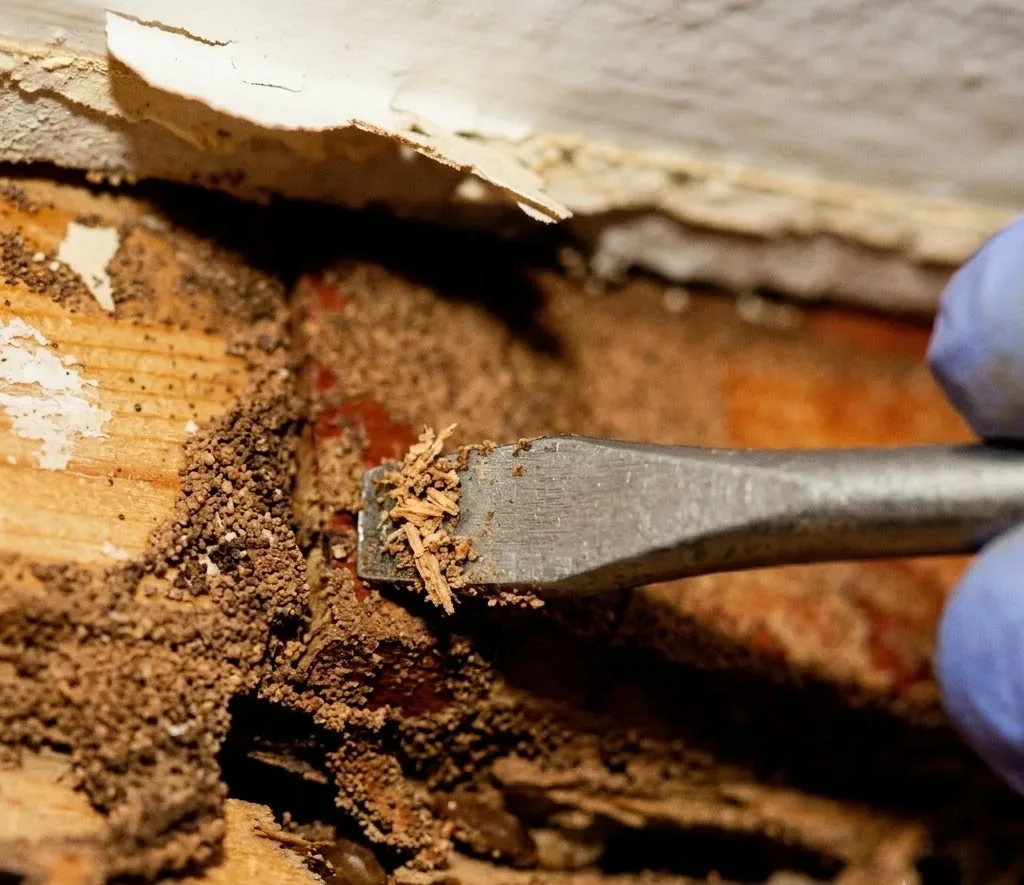
Formosan subterranean termites are the most destructive structural pest in the Charleston area. A mature colony can contain several million workers that forage aggressively through wood, foam insulation, and even utility conduits. Swarming season runs from late April through June at dusk. Finding caramel-colored winged insects near outdoor lights is the strongest early warning you can get.
3. Eastern subterranean termites
Less aggressive than Formosan but more widespread, Eastern subterranean termites build mud tubes from the soil to wood and feed throughout the year. They swarm during the day in late winter and early spring. Mud tubes on foundation walls, pier blocks, and sill plates are the diagnostic sign.
4. Fire ants
Red imported fire ants are a fact of life in Mount Pleasant lawns and landscaping. Their mounds appear and relocate quickly after rain, and their sting produces a characteristic burning welt. They nest in electrical equipment and utility boxes and can cause equipment failures as colonies grow. Broadcast bait programs are more effective than pouring on individual mounds.
5. Roof rats
Roof rats are the dominant rodent pest in coastal SC. They climb palm trees, live oaks, and utility lines to reach rooflines, entering through gaps at the soffit-fascia junction and around HVAC penetrations. Scratching above the ceiling at night, gnawed wiring in the attic, and grease marks along rafters are the giveaways.
6. Asian tiger mosquito
The Asian tiger mosquito is a daytime biter that breeds in any standing water larger than a bottle cap. It does not travel far from its breeding site, so it is the species most responsive to source-reduction. It also vectors dengue and chikungunya, adding a health dimension beyond the itch.
7. Lone star tick
The lone star tick is the most aggressive human-biting tick in South Carolina. The female is identified by a single white spot on her back. It is active from spring through early fall and is common in the wooded buffer areas and parks throughout the Mount Pleasant peninsula. Alpha-gal allergy (a mammalian meat allergy triggered by tick saliva) is a documented consequence of lone star tick bites.
8. German cockroaches
Unlike the palmetto bug, German cockroaches are an indoor pest that does not come in from outside. They arrive via infested grocery bags, cardboard boxes, and used appliances and spread through shared walls in multi-family buildings. A single pregnant female introduces an infestation; within weeks a population is established. They are the hardest cockroach species to eliminate and require professional gel bait programs.
9. Carpenter bees
Carpenter bees bore half-inch round entry holes into unpainted softwood fascia boards, roof overhangs, and deck rails. Structural damage accumulates over years, and woodpeckers that discover the larvae dramatically expand it. Painted surfaces are largely unattractive to them.
10. Ghost ants
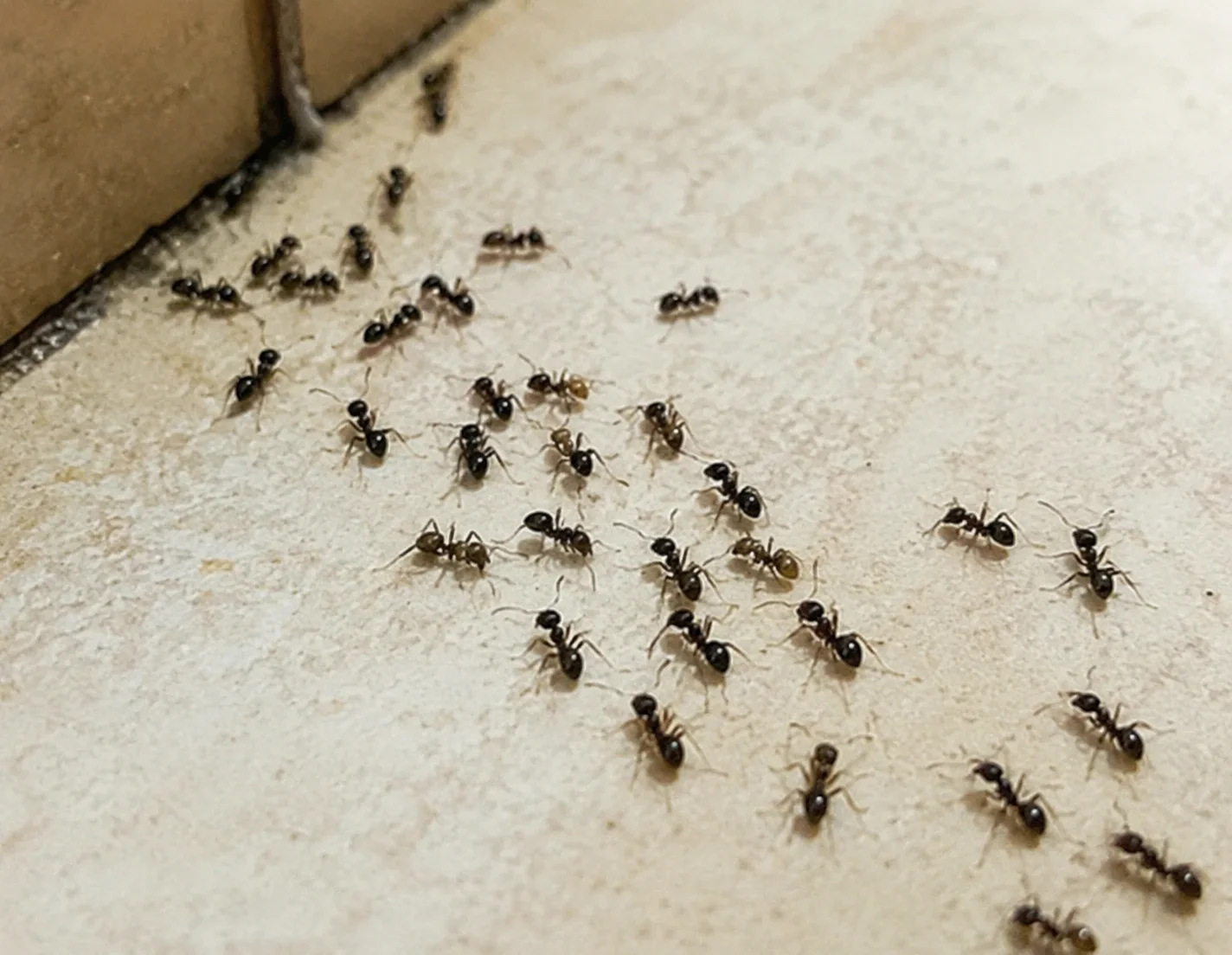
Ghost ants are tiny — barely 1.5mm — with a translucent abdomen, which makes them nearly invisible against light surfaces. They nest in multiple locations and are hard to control with residual sprays alone; their decentralized colony structure means that killing workers does not eliminate the queens. Gel bait programs targeted at trailing workers are the effective approach.
The common thread
Almost every pest on this list enters through the same gaps, moisture sources, and structural vulnerabilities. If you're seeing any of these regularly, a SCDPR-licensed inspection can identify exactly why your home is attractive and address it before the next wave arrives.
Dealing with this in your home?
Free inspections and straight answers across Mount Pleasant and the surrounding Lowcountry. Call (843) 868-3211 and we will connect you with a licensed local pro.